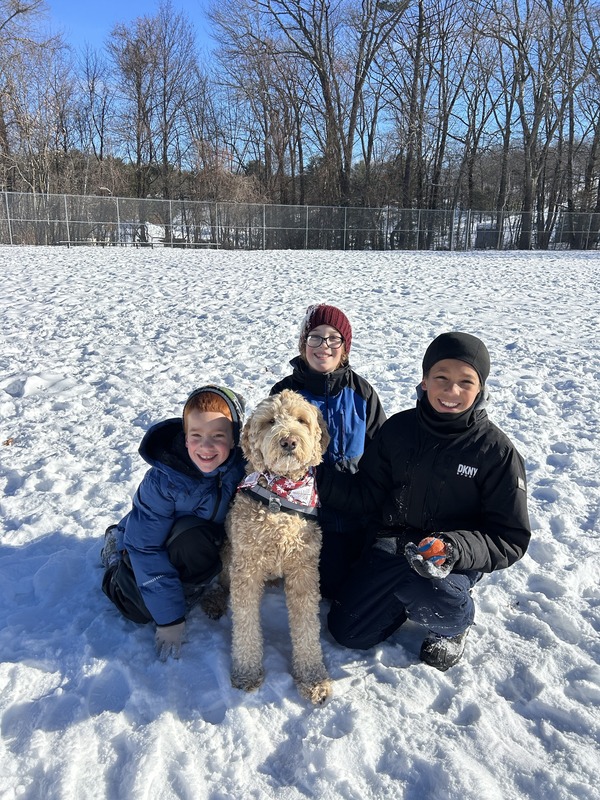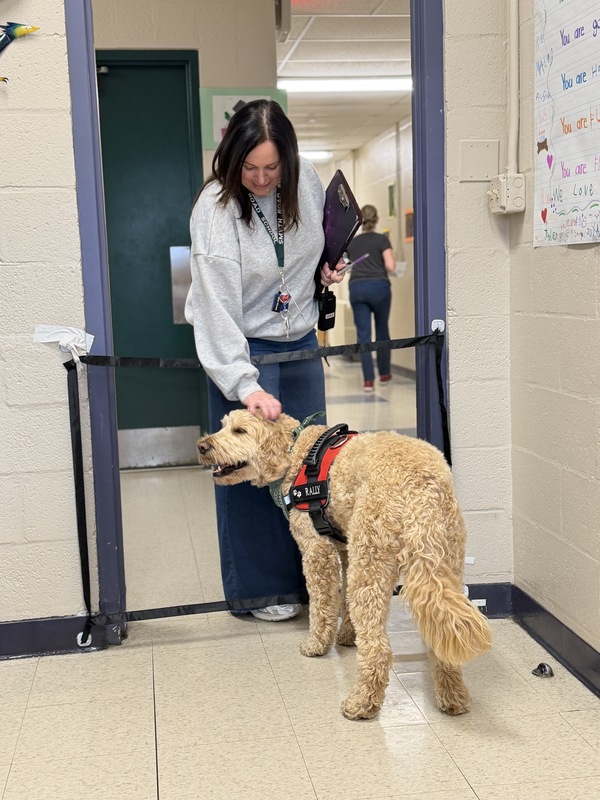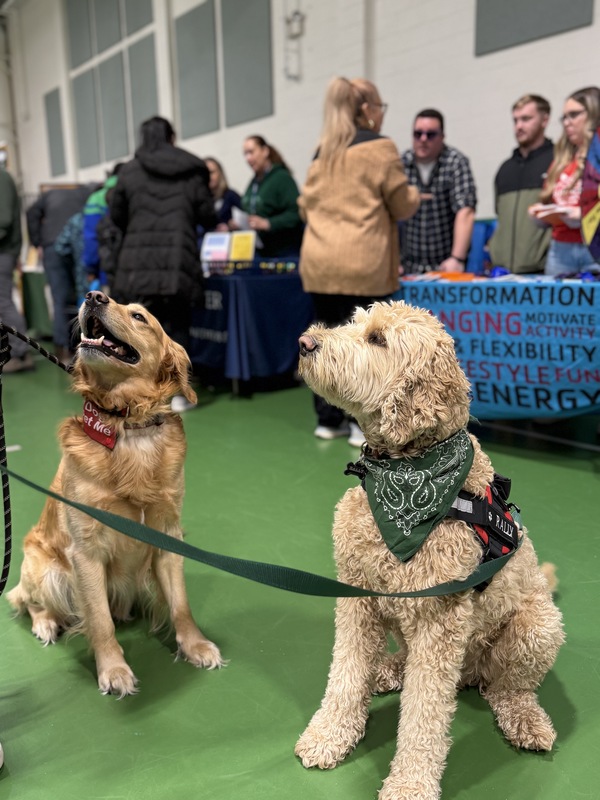
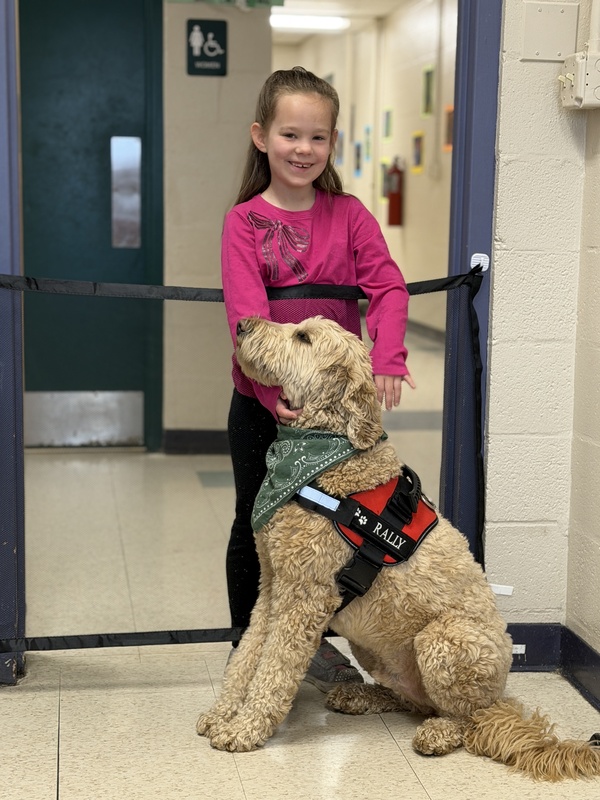
MANCHESTER, N.H.— Walking through the halls of Smyth Road with principal Jennifer Briggs feels like being in the presence of a celebrity on days when Rally the goldendoodle accompanies her to the office. Every single person, child and adult, who passes by stops to say good morning. But not to Principal Briggs.
“I’m a nothing when he’s around!” she said with a laugh. “But that’s ok, he makes them happy.”
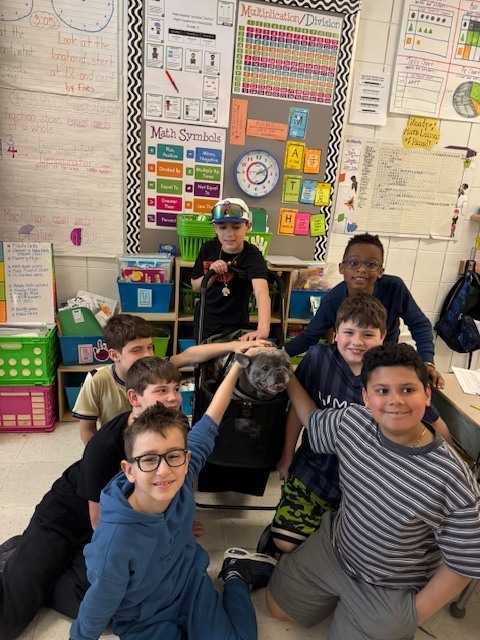
It’s a similar scene down the road at Green Acres Elementary, where most Mondays, Wednesdays and Fridays, assistant principal Colleen Fields can be seen pushing a stroller through the halls. In it, grunts and snorts can be heard coming from a little charcoal-colored face peeking over the side.
“The kids think Oliver’s noises are funny, a lot of them say he’s half pig, half dog!”
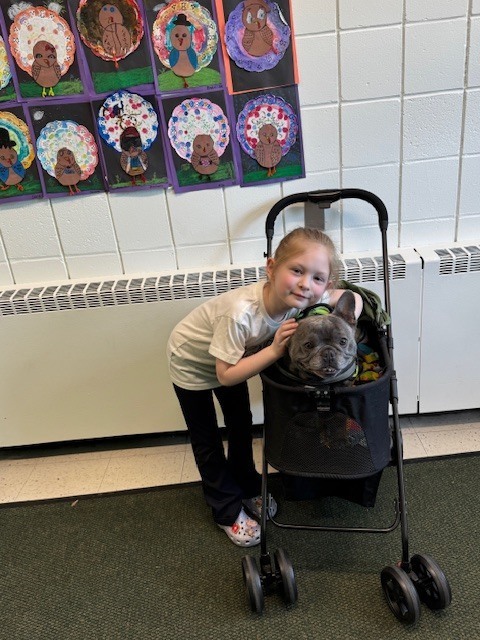
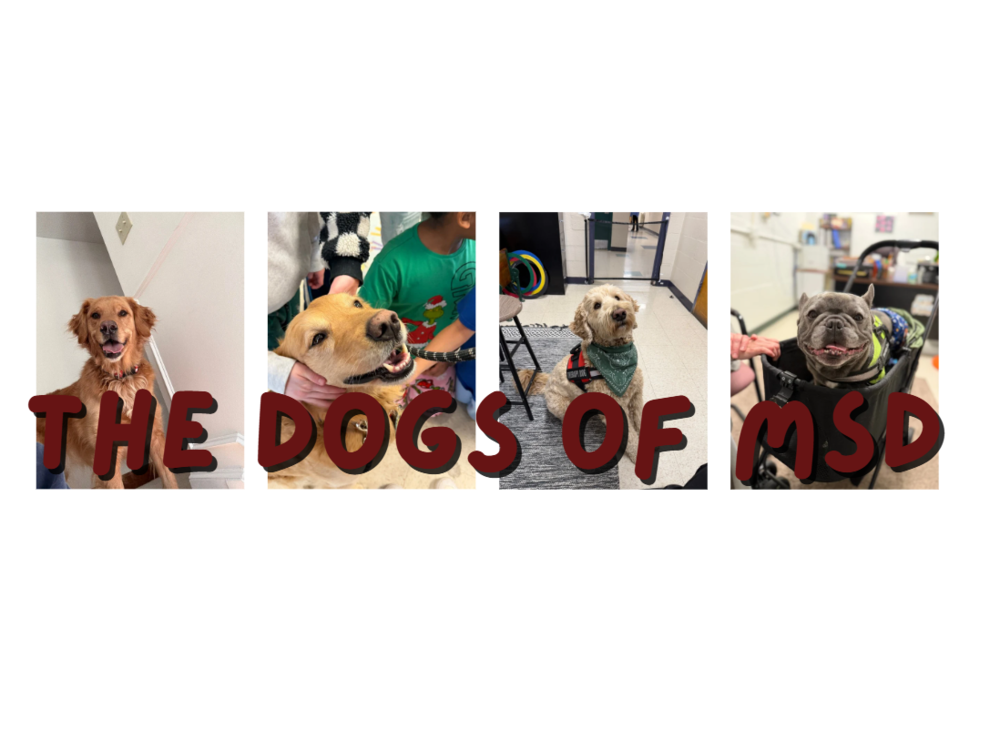
Oliver, a five-year-old French bulldog and Rally, a five-year-old goldendoodle are just two of the certified therapy dogs working in the Manchester School District. All of the dogs and their handlers completed rigorous training and certification processes before receiving their therapy dog licenses.
A litter of puppies and an idea
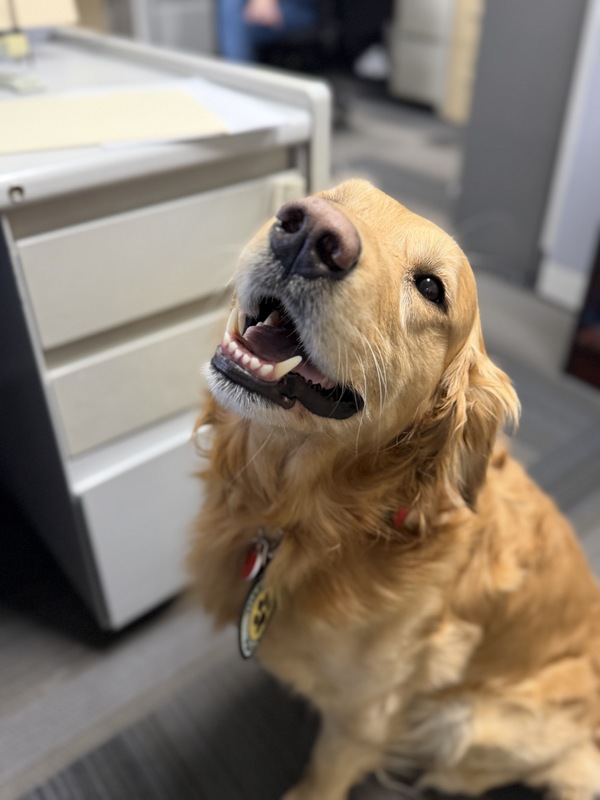
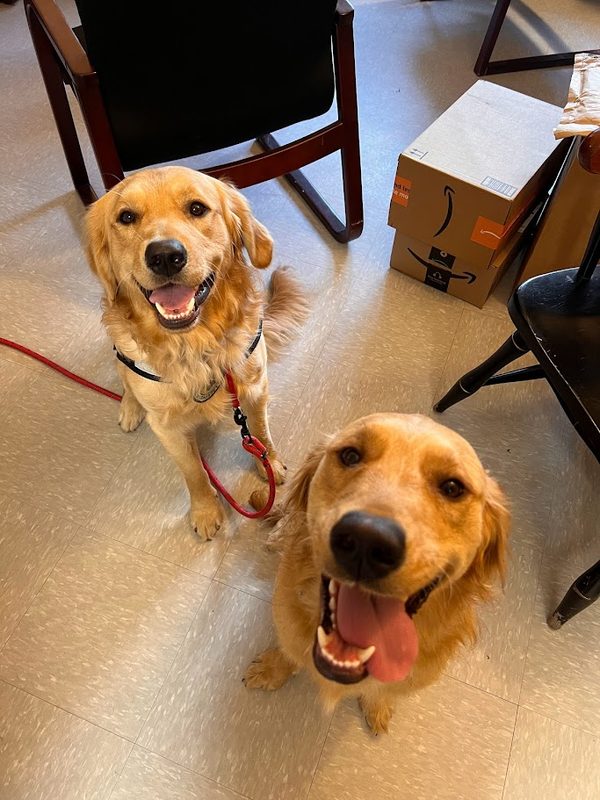
When you walk down the hallway at the District office, you can hear a muffled “thump, thump, thump” coming from Dr. Kelly Espinola’s office on a Friday morning. A peek into her doorway, blocked by a small gray baby gate, reveals a wagging tail and the smiling face of Nick, the golden retriever. A basket of well-loved toys and a container of treats sit in the corner of the room.
“His only job is to make people feel better,” Espinola said. And he certainly does.
The idea for a therapy dog program in the District began in 2021 during the COVID-19 pandemic. At the time, the now-assistant superintendent was principal at Parker Varney and was looking for a creative way to help boost reading scores. When her Golden Retrievers had a litter of puppies, she told then-assistant superintendent Dr. Jennifer Chmiel about her plan to train and have one certified as a therapy dog.
“We were in the middle of a big virtual meeting with Dr. Chmiel because we were still in COVID, and I said ‘hey guys, look what happened yesterday!’ and showed them our litter of one-day-old puppies. A few days later, Dr. Chmiel asked me what my plans were for the other puppies… Then she asked if she could adopt one and we could do the therapy dog training together.”

“When I met Patch (the Manchester Police Department therapy dog) I quickly saw the positive impact this type of program could have on our District,” Chmiel said. “I believe the combination of a therapy dog and learning is a perfect fit.”
Espinola and her family began training the puppies immediately, which included getting them used to being handled by children, having their paws and bellies touched, and having their ears played with. The early exposure to kids and adults put Nick and his brother, Hamilton on a path towards becoming eventual therapy dogs.
Talk of training therapy dogs eventually reached Colleen Fields, assistant principal at Green Acres Elementary. At the time, she had just adopted a French Bulldog puppy named Oliver.
“They were talking about the training and I thought it would be so fun to bring Oliver to school,” Fields said.
Once the boys turned eight weeks old, Espinola, Chmiel and Fields began formal puppy classes with their dogs.
Training involves hamburgers
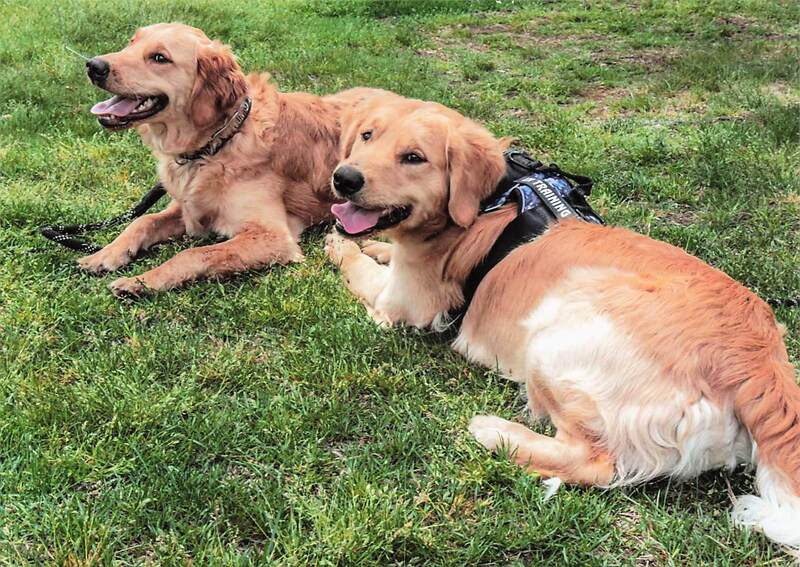
The process to becoming a certified therapy dog is not easy for the dogs or their handlers. It starts with puppy classes followed by Canine Good Citizen classes, which test dogs on ten essential obedience and social skills and certifies they are well behaved, confident and manageable in public.
“Urban Canine Good Citizen was the hardest test,” Espinola said. “We were in Concord, it was August and it was hot. We were on this outdoor patio and sitting area, there were lots of people and other dogs. We had to leave our dog in a sit position, leash off, then walk away. The trainer then brought out hamburgers and they weren’t allowed to eat the hamburgers! They threw fries in their direction and they weren’t allowed to leave their place. It was the hardest test.”
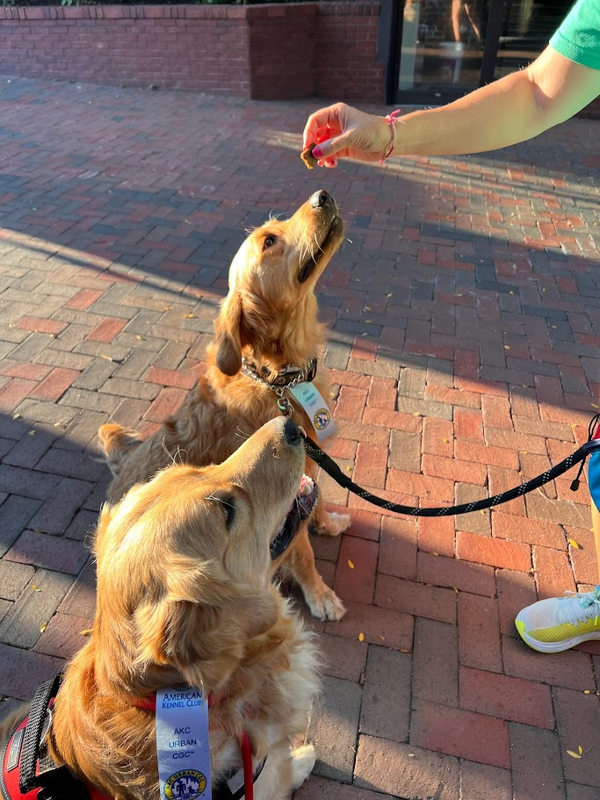
Once dogs reach one year of age and they’ve lived with their handler for at least six months, they’re able to begin the Alliance of Therapy Dogs (ATD) classes.
ATD applicants must pass a background check. After that, the dog’s temperament and bond with its handler are evaluated. After the assessment, the dogs must go on three to four supervised visits including at medical facilities and stores.
“It was every Saturday for a year. All of our plans revolved around the dogs,” said Espinola.
Fields said trainers were skeptical of a French Bulldog’s ability to pass the certification process, given their traditionally stubborn demeanor.
“But he’s different, he listens really well. He did a great job through it and was able to get certified.”
When it was over, all three dogs passed with flying colors.
Once the dogs were certified, Espinola and Chmiel worked together to draft a District policy on therapy animals in schools. Some of the conditions include notifying school leadership in advance if the animal will be on campus and possessing the proper training and vaccination documents.
When Smyth Road Principal Jennifer Briggs saw how successful Nick, Hamilton and Oliver had been in their classes, she looked into the possibility of certifying her new puppy, a Goldendoodle named Rally.
“He just has a really chill disposition. I didn’t get a dog with the intention of training him to become a therapy animal, but it’s been the best thing I could have done.”
Top dogs on campus
Once Briggs completed the certification process with Rally, she began the process of introducing the idea to her students with the help of a book she wrote for the occasion called “Rally is going to be a Roadrunner.” Aside from introducing Rally and letting them know he’d be at their school, Briggs also used the story to drive home some important life lessons Rally has learned.
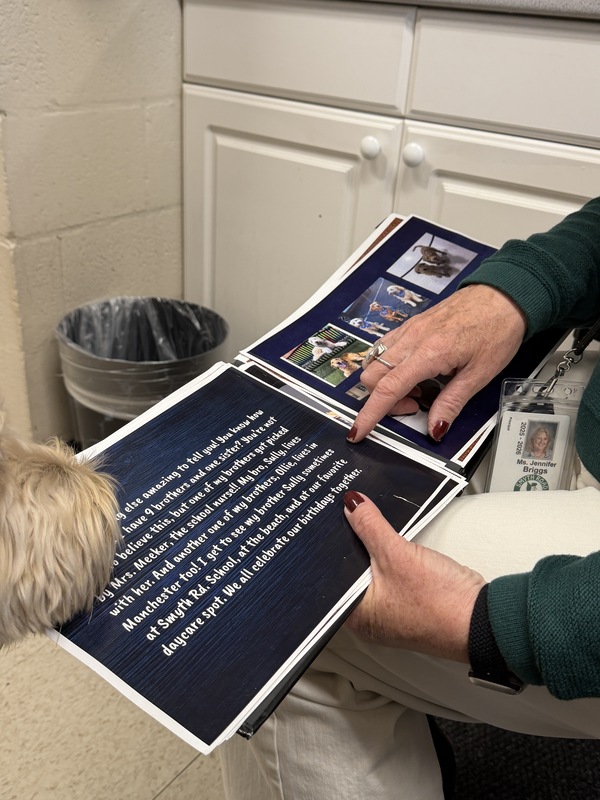
“It says ‘I was picked last, all nine of my brothers and one sister went to their forever homes before I did, but being picked last ended up being the best thing ever.’ It’s not always a bad thing to be picked last. I really wanted to drive that home.”
The story worked.
“Everyone was thrilled, they didn’t really understand the impact he would have but as time went by he became the obsession. He’s part of everything that we do,” Briggs said. “He lifts people, he has the ability to make people feel better in his presence, and that’s the whole idea of a therapy dog, to bring some comfort, bring some calm, bring some peace.”
Fields says she’s experienced a similar reaction to Oliver, whom students have even petitioned to make their school mascot.
“It’s great to see how much he can actually make the kids feel better. It’s not just the kids, the staff sometimes, if they’re having a bad day they’ll come in in the morning to see him, so he makes those people feel better too.”
Not everyone thought animals in schools were a good idea, but the dogs quickly changed their minds.
“At first there were some staff members who didn’t believe that dogs should be in schools,” Espinola said. “But now, that staff member has seen such a drastic change in the student body, they 100% believe in the power of an animal.”
While the dogs spend most of their time at their handler’s school, there are days when other principals in the District will ask for support, including the passing of beloved Central High teacher Abby Gemme earlier this year.
“I know people say this about dogs, but I truly agree that they can sense when someone is not feeling great, he will go right to those people and just sit, it’s like a sixth sense that he has,” said Briggs. “The kids who were so upset, he just went and put his head on their lap. He knew what his job was.”
“I believe the dogs absolutely leave a positive impact,” Chmiel said. “They leave a wake of happiness or calm after their visits.”
For Fields, she sees how Oliver is able to support other students on a weekly basis.
“One of my kids is now in fifth grade next door (at McLaughlin Middle School). His mom drops his sister off here and she was telling me he’s really struggling at his new school. So we’ve made it a point to touch base in the morning a couple of times a week for him to see Oliver”
A hard goodbye
While Nick and Oliver will remain in the District next school year, Briggs and Rally are set to retire in just a few weeks. She’s been busy preparing her students for the change, including with another book filled with Rally’s words of wisdom, a collection of advice Briggs has for her students from Rally’s perspective
“One boy whose mother told him I’m retiring said ‘it’s not that I don’t like you but I’m really going to miss Rally!’ ”
Briggs says she and Rally hope to visit the school from time to time until her current students move on.
Lessons learned
When asked what Espinola, Chmiel, Briggs and Fields think about the program, all four said they wished they had done this sooner.
“It’s a huge difference, for them to have the option to sit with him– they’re just happy to see him in the hall even,” Briggs said. “We’ll sometimes just stand in the hall and every kid comes by and it’s hard to imagine that just one little touch on the way by makes them so happy.”
“I think everyone who has the ability to do it should do it. He’s such a great part of our community. I think every school should have one,” Fields said.
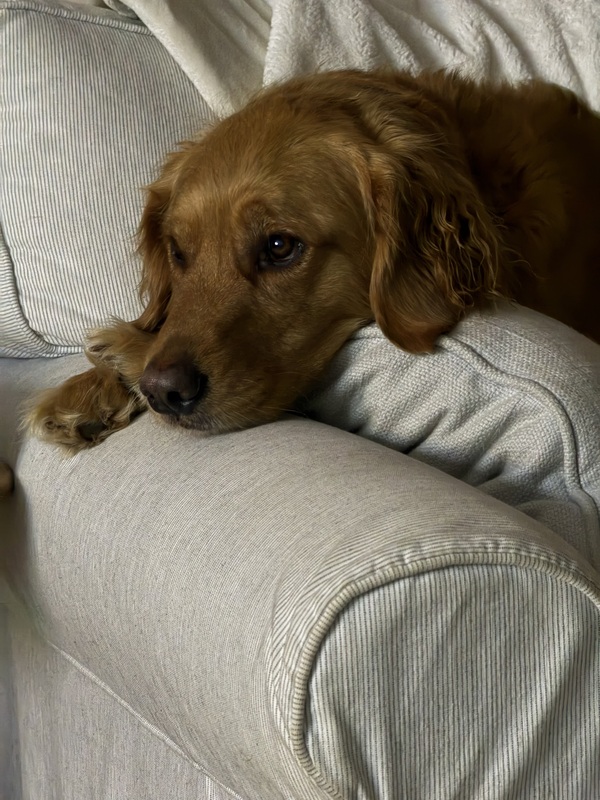
“I am thrilled I was able to bring Hamilton into my life, both at home and at work,” Chmiel said. “My only regret, I have not been able to get him into work more. I know it makes him happy and it brightens the days of those he gets to interact with.”