
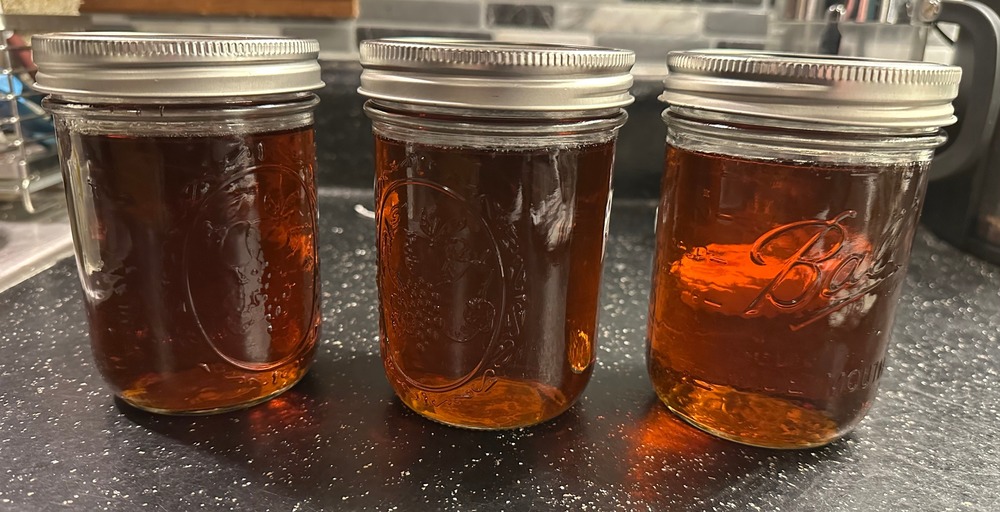
MANCHESTER, N.H.- It’s the kind of lesson only a teacher in New England would come up with– The science behind maple syrup.
“The goal is to get a gallon of syrup, that’s 50 gallons of sap,” says Hillside science teacher Mary Hartigan-Demers. “We’ve collected 15 gallons already!”
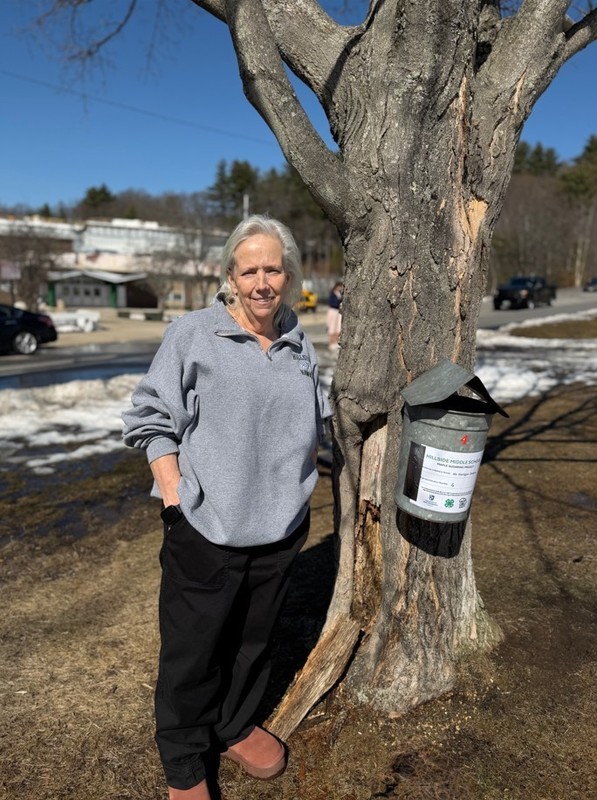
The idea for the project came after a UNH Agroforestry trip to Vermont where she learned about the process of producing maple syrup.
“I was like ‘oh wow! How could I do this?”
Hartigan-Demers says a teacher from Goffstown told her about their high school’s plans to build a sugar shack on campus and encouraged her to do some more digging into the logistics. After working with an arborist, she discovered the trees directly across the street from Hillside are sugar maples. A colleague whose family has a sugar shack then donated buckets and taps to the cause.
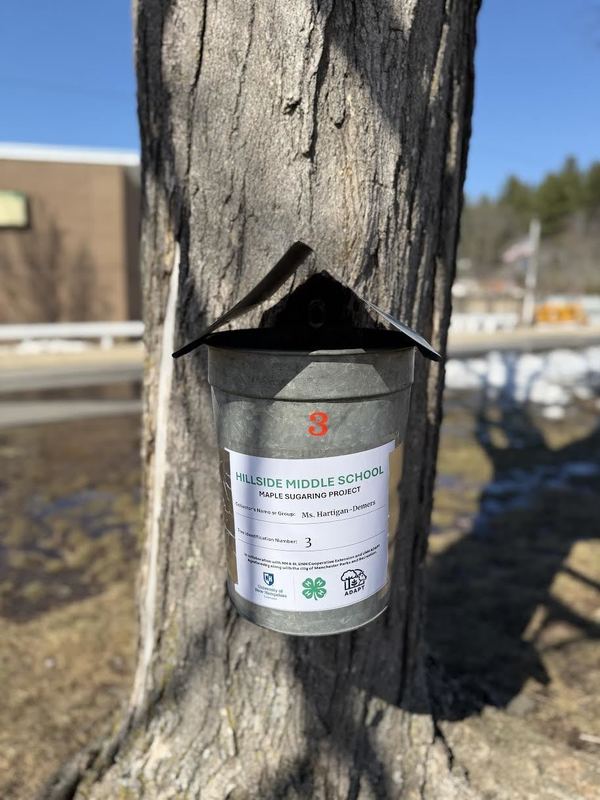
The buckets are hung every morning by her Advisory students. Once the sap is collected, it's boiled down into syrup.
“They think it’s great. When I was showing them videos of how it's made, I went through all of the math with them, the fact that you’re boiling off 95% water, you have to get rid of all of the water before you get syrup!” Says Hartigan-Demers. “That’s why real maple syrup is so expensive!”
The project incorporates several core subjects, including the history of maple collection and how it became a food source, as well as how to identify the trees and which ones are suitable for sap collection. There’s also quite a bit of math involved, including the sap-to-syrup ratios and the role temperature plays in collection.
“We’re recording daily collection temperatures, and in math class they’re going to see if there’s any correlation to the amount of sap we’re getting and the temperature,” says Hartigan-Demers.
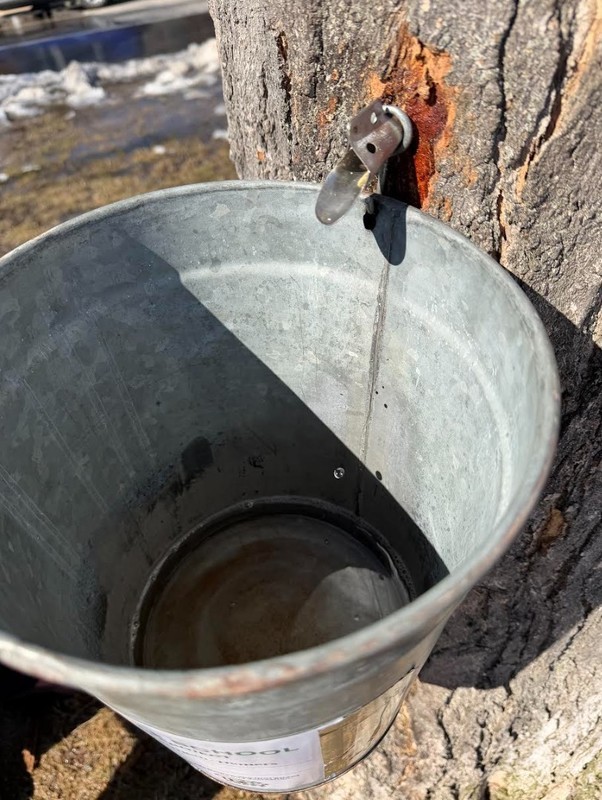
“We want to keep expanding these Project based Learning activities,” says Nicole Doherty, Assistant Superintendent of Teaching and Learning. “These are authentic learning experiences that students can take with them on their educational pathways and beyond.”
"I hope they enjoy this because I think most of them are used to eating syrup from the grocery store,” says Hartigan-Demers. “Now the kids say ‘Can we go outside? Can we go outside?’ And I tell them, ‘As long as you have the right shoes!”
Hartigan-Demers says she hope the project inspires not only her students, but other teachers as well.
“This is right here in our own yard, Like I can take these kids across the street at any time and they realize this is happening right here… I think it’s better than any textbook ever written.”